Is Your Child Enrolled for 2027 Yet? Time is already running out.
April 16, 2026 - Jamie Lake

The clock is already running
If you have not started thinking about a 2027 school place, this is the moment to act. Across South Africa[1], the Department of Basic Education[2] says parents should register children for the following year well before the current school year ends, and notes that applications generally happen between April and October, depending on the province. But those broad national dates hide the real urgency. In the Western Cape[3], the on-time 2027 admissions window for Grade R, 1 and 8 opened on 10 March 2026 and closed on 14 April 2026, with late applications only running until 17 May 2026. In KwaZulu-Natal[4], the 2027 public-school admissions period began on 8 April 2026 and runs to 31 August 2026. [5]
That means April 2026 is not early. In some places it is already late. And even where a provincial window is still ahead, it arrives quickly. The Gauteng[6] cycle for the 2026 academic year opened on 24 July 2025 and closed on 29 August 2025, a short window for Grade 1 and 8 parents to get everything right. At school level, the pattern is the same: King Edward VII Preparatory School[7] says Grade R and Grade 2-7 applications for 2027 are already open, Eunice High School[8] says its 2027 applications open on 30 April 2026 and close on 31 August 2026, Thornhill Primary School[9] says its 2027 Grade R and Grade 1 admissions are already open, and De Kuilen Primary School[10] closed Grade R and Grade 1 on-time admissions on 14 April 2026. [11]
Pssst - We're launching our Grade R and 1 modules in time for 2027. Join our waitlist today for R200 worth of credits for when they drop.

Waiting cuts your options
Parents often assume that because the year has barely started, there is still plenty of time. Official admissions systems say the opposite. The Western Cape Education Department[12] has stated that late applications will only be considered after on-time applications have been processed. It also said that 166,144 learners were applied for on time in the province for 2027, which gives you a sense of scale. The Gauteng Department of Education[13] has been equally direct: parents should apply during the application period because schools become full, and late applicants do not have a wide choice of schools. [14]
This is why the question for parents is not, “Is it too soon?” It is, “How much choice do I want to keep?” If you apply on time, you are in the first round. If you delay, you are asking schools and departments to fit your child in after earlier applications have already been processed. In oversubscribed areas, that can mean a place further from home, fewer language options, or a wait for movement on a list. The Western Cape admissions FAQ is blunt that many places only open once other parents confirm or decline offers, and that parents who miss out should stay in touch with schools and request waiting-list consideration. [15]
What you should do this week
Start with the paperwork. National guidance says parents should have the birth certificate, immunisation card and, where relevant, the transfer card or latest school report. Provincial systems add proof of residence and, for foreign learners, passports, permits or proof that an application for permission to remain in the country has been made. In the Western Cape, parents are told to upload the learner’s identity documents, proof of residence, immunisation card and latest school report. In KwaZulu-Natal, schools are instructed to require the birth certificate, immunisation card, last report card and relevant Home Affairs documents for non-citizens. [16]
Build a realistic school list, not a fantasy list. The Western Cape says parents should apply to at least three schools, including schools closest to home, and rank them in order of preference. Gauteng’s online process allows parents to apply to a maximum of five schools and requires supporting documents to be uploaded or submitted within seven school days of applying. That tells you exactly what sensible planning looks like: choose more than one viable school, know your order of preference, and do not leave your documents for later. [17]
Use official help, and avoid shortcuts. The Western Cape says its admissions site is zero-rated and backed by eCentres, step-by-step guides and pop-up support sites. Gauteng says it has decentralised walk-in centres to help parents register and apply, free of charge. It also warns that private operators have been scamming parents with promises of guaranteed placement for a fee. No serious application strategy begins with paying a random middleman. [18]

How to improve your child’s odds
The biggest factor is not polish. It is accuracy. In Gauteng, proof of home address is described as the most important document for placement, and an application without a valid proof of home address is treated as incomplete. If your address, grade, school choice, language option or contact number is wrong, you are creating problems before a school has even considered your child. Parents should read every field twice before they submit. [19]
Parents should also understand where selection does and does not happen. The national department says an ordinary public school may not administer a test for admission. Gauteng adds one clear exception: schools of specialisation may use an approved placement test, audition or sporting trial, and parents must contact the school about dates and times. At independent schools, the admissions process can involve observation days or interviews. In other words, do not waste time “coaching” a child for a standard public-school entrance test that should not exist, but do pay attention if you are applying to a specialist or independent school that has official assessments in its process. [20]
Do not give up if you are missing a document. The Western Cape says that where standard identity documents are not available, a South African Police Service affidavit can be accepted in some cases. KwaZulu-Natal’s 2027 circular goes further and says undocumented learners must not be refused admission, and that principals must help parents with the process of documenting those learners during the year of admission. Missing paperwork is a reason to ask for help fast. It is not a reason to do nothing. [21]
What happens after you apply
Application day is not the finish line. It is the start of a sequence. In the Western Cape, outcomes for on-time applications become available from 28 May 2026, and parents must confirm acceptance between 28 May and 15 June 2026. After 15 June, parents who receive a new offer have only three days to accept it. Gauteng’s previous cycle advised parents to accept each offer within seven days. Gauteng also emphasised that parents should register one reliable cellphone number because the system uses SMS updates throughout the process. If you ignore messages, or if the number on the profile is wrong, you can lose time you do not have. [22]
Parents with children outside entry grades need to watch different rules. Gauteng says its online system only covers Grade 1 and Grade 8, and that applications for other grades must be made directly at schools. The Western Cape says transfer requests for Grades 2-7 and 9-12 open on 3 August 2026. The practical point is simple: if your child is not entering Grade R, 1 or 8, do not assume there is no deadline. There is one. It may just sit on a different page or use a different process. [23]
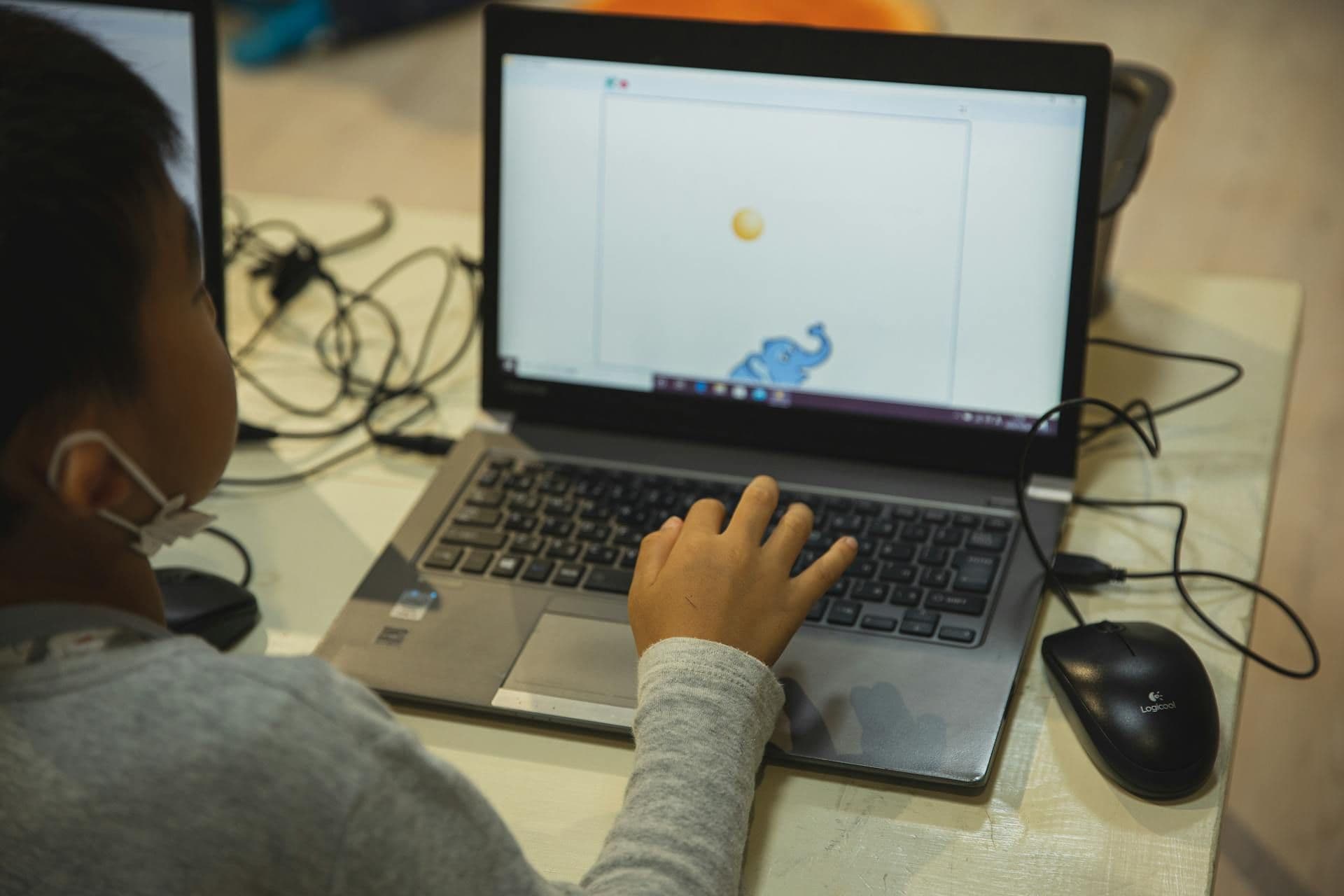
Once your childs place is secured, how can you help them succeed in 2027?
Although schools will do what they can to provide a quality education for your child, what they do outside of school is often more important for their success.
To get started, here are some resources we've found useful:
- Twinkl South Africa – Worksheets, phonics, maths activities, and printable packs for Grade R–3.
- Funda Wande – Early reading and maths resources designed for foundation phase learners.
- Department of Basic Education South Africa – Free CAPS-aligned workbooks, storybooks, and Grade R resource kits.
- WCED ePortal – A wide range of Grade R learning materials and activities.
And if you really want to level up your child's learning, our Educational Modules will be ready in time for 2027. As a bonus, parents who join our waitlist today will receive R200 worth of credits to spend on modules when we launch.
A 2027 application is not an administrative chore to park for later. It is a date on the calendar, a file of documents, a shortlist of schools, and a series of deadlines that are already moving. The parents who act now keep options open. The parents who wait hand those options away. If you have any questions or concerns, please reach out to us or leave a comment below and we'll do what we can to assist.
Sources
- [1] [17] [22] https://www.westerncape.gov.za/
- [2] [3] [5] [6] [7] [16] [20] https://www.education.gov.za/
- [4] [10] [11] [12] [13] [19] [23] https://cmbinary.gauteng.gov.za/
- [8] [15] https://www.westerncape.gov.za/
- [9] [14] https://www.westerncape.gov.za/
- [18] [21] https://www.westerncape.gov.za/

Comments
Loading comments…