Why Games Are Addictive (And Why Most "Gamified" Educational Software Isn’t)
May 19, 2026 - Jamie Lake
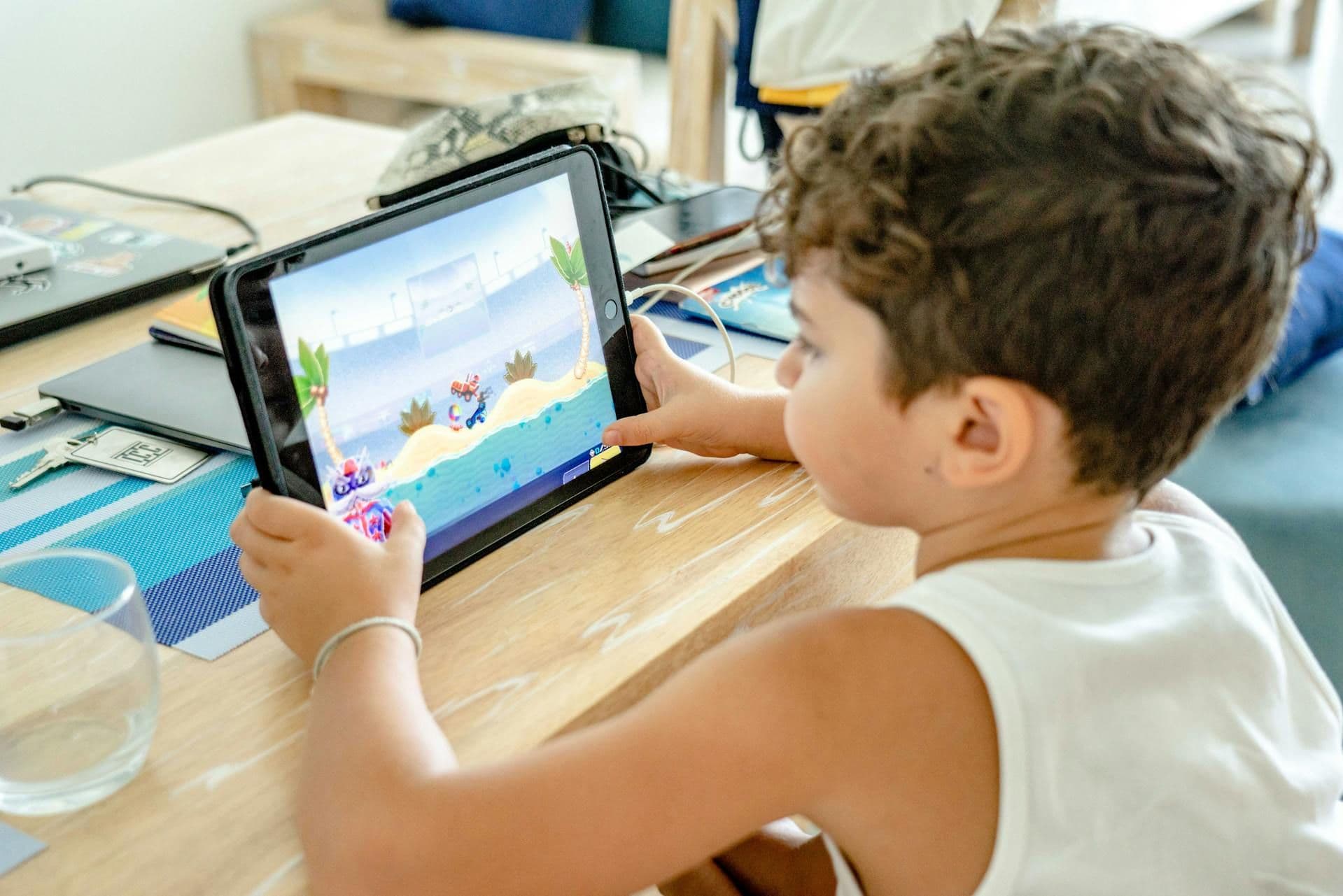
You already know the puzzle. A child who cannot sit still for ten minutes of homework will happily disappear into a video game for an entire afternoon. Same brain, same desk, same energy level. The only thing that changes is what is on the screen.
The usual response from the education industry has been "gamification". Add points. Add badges. Add a leaderboard. Wrap the worksheet in a colourful skin and call it a game. Most parents and teachers have now seen enough of these platforms to know how the story ends: a burst of novelty, then a fast slide back to the same struggle to get a child to open the app.
The reason this keeps happening is simple. Most gamified educational software borrows the surface of games without touching any of the mechanisms that make games hard to put down. The good news is that those mechanisms are well documented in the research, they are not magic, and they can be used responsibly. The bad news is that doing this properly is much harder than gluing a star sticker onto a quiz.
This post is about what actually makes games addictive, why most gamified platforms miss it, and what genuinely engaging interactive learning software needs to do instead.
What actually pulls players back
The strongest single account of game engagement comes from Self-Determination Theory, developed by Richard Ryan, Edward Deci, and colleagues. Their work applied to games shows that what predicts enjoyment and future play is not how flashy a game is, but whether it satisfies three psychological needs: autonomy (the sense that you are choosing what to do), competence (the sense that you are getting better), and relatedness (the sense that you matter to other people in the world of the game).
Recent meta-analyses sharpen the picture further. Across 253 studies, the strongest predictors of intense engagement with games include escape motive (r = 0.42), depression (r = 0.40), stress (r = 0.39), time spent gaming (r = 0.38), and impulsivity (r = 0.38). In other words, games are not just fun. They are unusually efficient at delivering competence, relief, structure, and belonging, often more efficient than the offline environment a child happens to be sitting in.
That last sentence is the one that matters for educators and parents. The reason a child will play a game for five hours and not open a textbook for five minutes is not that the game is brighter. It is that the game is meeting a need that the textbook is not.
Three engagement levers do most of the work.
First, dense progression. Games slice long-term goals into a constant stream of short-term wins. Levels, ranks, stars, quests, achievements, season tasks. Every action visibly moves the player forward. The "almost there" state is psychologically sticky because it promises that competence is just one more push away.
Second, uncertain rewards and surprise. The brain learns most strongly from prediction errors, the gap between what we expected and what we got. Games are unusually good at producing small, well-timed surprises: a critical hit, a rare drop, a new path that opens. These are not gimmicks. They are how reinforcement learning actually works.
Third, immediate feedback. In a well-designed game, the player knows within a second or two whether what they did worked. There is no waiting until next Tuesday for a marked worksheet to come back. Feedback that is this fast is the difference between practice that builds skill and practice that just builds frustration.
Wrap these together and you get the basic loop that every engaging game runs on: a cue or trigger, an easy first action, a quick challenge, immediate feedback, a small reward, a visible sense of progress, an unfinished goal, and a return.
What "gamification" usually does instead
Now look at what most so-called gamified educational software actually does.
The content underneath is almost always the same as a printed workbook. Read this paragraph. Answer these multiple-choice questions. Move to the next page. The "gamification" sits on top of that core experience as a thin reward layer: earn points for completing the quiz, unlock a badge after ten quizzes, climb a leaderboard if you grind through enough of them.
Children see through this almost instantly. The reward is not connected to the learning. It is a sticker pasted onto a chore. And because the underlying chore is unchanged, none of the mechanisms above are actually firing.
There is no real autonomy, because there is one path through a fixed set of questions. There is no real competence growth, because completion is being measured rather than mastery. There is no surprise, because every question has the same shape as the last one. There is no dense progression, because the next "level" is just the next chapter of the same book. There is no immediate feedback inside the learning itself, only a tally at the end.
This is why so many gamified platforms see a strong launch and a brutal retention curve. The shiny wrapper produces a novelty spike. The unchanged content produces a fast collapse back to baseline. Add a streak penalty and a push notification and you can hold a few more children a little longer, but the underlying problem has not changed. Pressure has just been added to a chore.
This is also why so much educational software ends up looking, in the end, like a slightly more expensive version of a traditional textbook. The medium changed. The mechanics did not.
What real game-style learning looks like
Closing the gap between "gamified" and "actually engaging" does not require copying everything from the gaming industry. It requires copying the right things and refusing the wrong ones.
The right things look something like this.
The learning is the game, not something wrapped in a game. If a child masters a concept by playing through a scenario, debugging a circuit, or guiding a character through a sequence of choices, the act of learning produces the same feedback rhythm as a game. The "reward" is not a badge added afterwards. The reward is the next thing becoming possible.
Feedback runs in seconds. A child should know within one or two interactions whether what they did was correct, almost correct, or off the mark, and the explanation should be visible right there. This is much closer to how a good tutor behaves than how a textbook behaves.
Progress is dense and visible. The child can see exactly what they can do now that they could not do last week, and what is just out of reach. Done well, this is the most powerful motivational force in learning. Done badly, it becomes the streak trap that we will get to in a moment.
The path adapts to the learner. Genuine competence growth depends on staying in the narrow zone where work is hard enough to matter but not so hard that it crushes the child. This is the principle behind our adaptive learning algorithm: keep the child moving forward at the edge of their ability, park topics that are not landing yet, and rotate back to them when the foundation is stronger.
There is real surprise in the content. A new concept does not need to be wrapped in random rewards to feel exciting. It needs to be presented in a form the child does not already know the shape of. Animation, simulation, branching scenarios, and discovery-based interactions do this naturally. Static text very rarely does.
Mastery is the unit, not completion. The metric that matters is whether the child can now do something they could not do before, not whether they ticked a box. This sounds obvious. Almost no widely used educational platform actually measures this way. The science of learning is clear on the difference, and so are the children using these platforms.
The line we should not cross
The same research that explains why games are engaging also explains why some of them become harmful. It would be dishonest to discuss what makes games addictive without naming the patterns that responsible educational software should refuse to copy.
The pattern most often imported into gamified learning is the punitive streak. Miss a day, lose your fire. Miss two days, lose your progress. This is straight out of the playbook used by free-to-play games that monetise relief from frustration the game itself created. It produces short-term retention numbers and long-term anxiety, and it punishes exactly the children who already feel they are falling behind.
Closely related are time-limited rewards that expire if a child does not log in often enough, opaque random rewards used to drive return visits, and social pressure mechanics that turn schoolwork into peer comparison. Each one of these can move a metric. None of them belong anywhere near a child’s learning environment.
The useful distinction is that engagement design exists on a spectrum, and most of the genuinely effective mechanisms sit at the healthy end. Dense progression, immediate feedback, real competence growth, optional collaboration, and surprise in the content itself can carry an enormous amount of engagement on their own. The coercive mechanisms at the other end of the spectrum, the loot boxes and streak traps and FOMO timers, are not necessary to keep a child coming back. They are a shortcut that trades long-term wellbeing for short-term metrics.
The best interactive learning software treats this line as non-negotiable. Use what makes games genuinely enjoyable. Refuse what makes them harmful.
Why this matters for what comes next
The promise of "gamified learning" has not been broken because gamification does not work. It has been broken because most educational platforms have been wrapping textbook-style content in shiny rewards, and then wondering why the rewards stop working.
The actual work is harder. It means rebuilding the learning itself so that mastery, surprise, and visible progress are baked into the experience, not stuck on the outside. It means designing for the full arc of a child’s education, from Grade R through Grade 12, so that the loop holds together over years rather than collapsing after a month. And it means being willing to leave the coercive shortcuts on the table, even when they would move a number on a dashboard.
Done properly, you do not need to nag children into opening the app. You are building the kind of learning experience they would have chosen to open on their own.
That is the bar.

Comments
Loading comments…