Building EdSoft for The Future: Third-Party Modules
April 14, 2026 - Jamie Lake
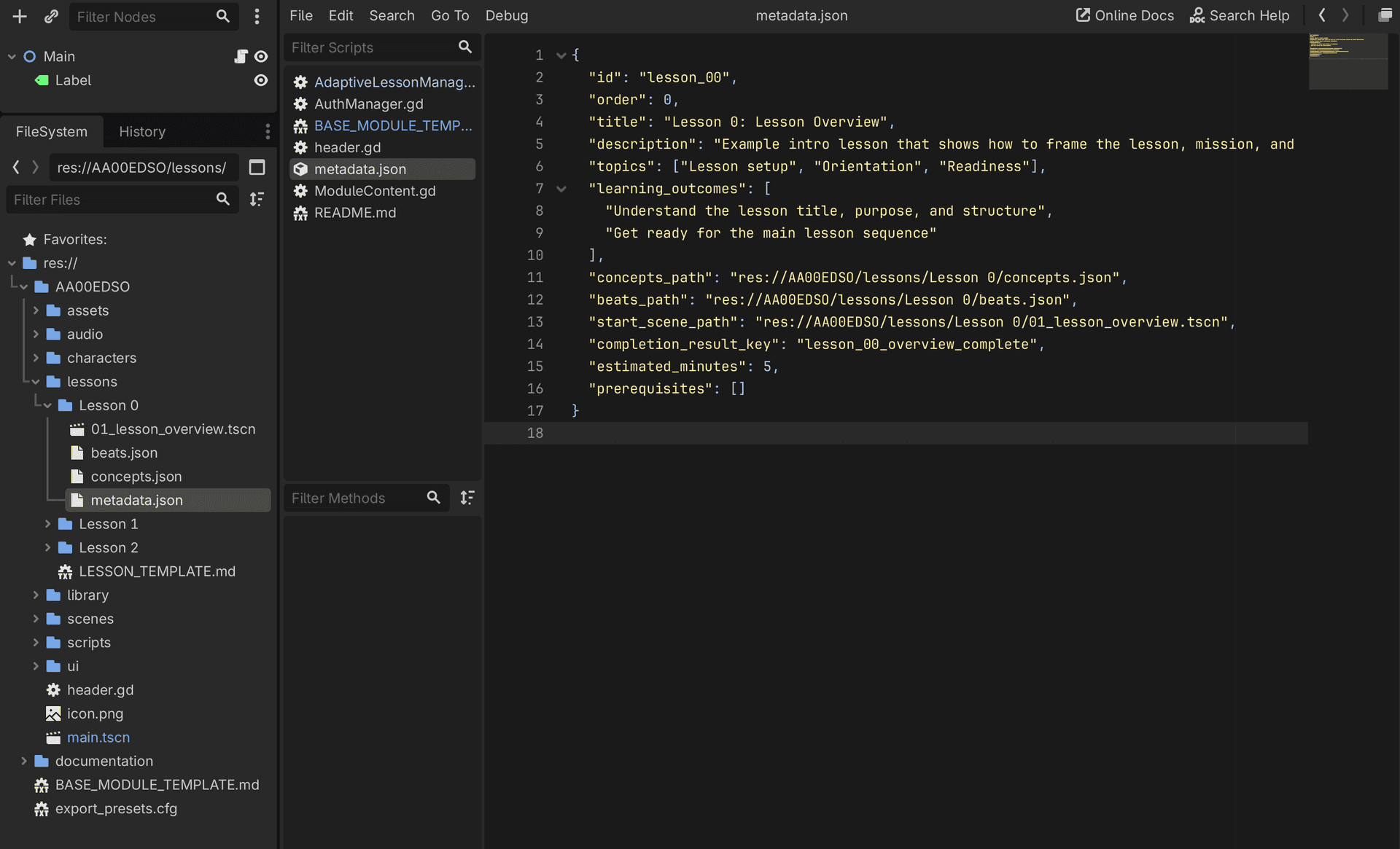
Today I spent roughly 14 hours building out the template all EdSoft modules will follow. One of the long-term goals for EdSoft is not just to publish our own modules, but to build a platform that can eventually support modules created by third parties as well.
This post is mostly about why and also our future plans to support 3rd party development on the EdSoft platform.
Why Third-Party Module Support Matters
If EdSoft is going to grow into a broader learning platform, it cannot depend forever on every module being built manually from scratch in-house.
A platform becomes much more powerful when it can support content created by:
- partner organizations
- curriculum teams
- specialist subject authors
- publishers
- external studios
- independent educational creators
But third-party module support only works if the platform is structured clearly enough for others to build against it.
That means module creation cannot stay a custom process hidden inside our team’s internal knowledge. It needs to become a repeatable system.
The Real Challenge
Supporting third-party modules is not just about allowing someone to upload content.
The real challenge is making sure outside modules can still fit the platform correctly. That includes:
- login and profile flow
- lesson structure
- progress tracking
- module access rules
- adaptive teaching expectations
- interaction patterns
- dashboard presentation
- save and resume behavior
If those things are unclear, every outside creator will solve them differently, and the result will be inconsistency, breakage, and a poor learner experience.
So before we support third-party modules, it needs a strong internal standard.
Why We Built a Template Module
The template module is the first step to create a clear standard.
Instead of every module being invented from scratch, the template provides a shared foundation that shows:
- how a module is structured
- how lessons are organized
- how lesson metadata is stored
- how adaptive lesson flow works
- how progress is recorded
- how the module fits into the EdSoft shell
A strong template becomes the reference for what an EdSoft module looks like.
This approach also fits the broader vision of curriculum-aligned modules delivered through one shared learning platform for learners globally.
More Than Code
Along with the template, we're also working on robust documentation.
If third parties are ever going to build modules successfully, they need more than code access. They need:
- planning guides
- lesson authoring rules
- metadata templates
- concept templates
- interaction libraries
- adaptive teaching guidance
The documentation will provide clear instructions on building out lessons within the template, giving any team the opportunity to develop something great.
Why We Are Designing for This Early
Even though third-party modules will not be available at launch, we're making sure EdSoft is being developed with them in mind.
It helps us:
- avoid locking ourselves into one-off module architecture
- create cleaner standards from the beginning
- reduce future migration work
- build more consistent internal modules
- prepare for partner-created content later
If we wait until after launch to think about third-party support, we risk having to undo major structural decisions. Building with that future in mind now gives EdSoft a much stronger foundation.
That same thinking already shows up in our post on our adaptive learning technology and how modules are meant to fit into real teaching environments, including schools and classrooms.
What This Means for the Platform
The long-term goal is for EdSoft to be able to accommodate modules from more than one source while still feeling like one coherent platform. The template module is the first step towards that.
It helps us build internal modules faster today, but its bigger value is that it creates the standards future third-party creators will be able to build against.
Looking Ahead
Third-party module support is not part of launch, but it is part of the direction.
By building the EdSoft template module now, we are laying the groundwork for a future where new learning experiences can come not only from the core team, but also from trusted outside creators working within a shared system.
That is how EdSoft becomes more than a collection of modules. It becomes a platform ready to grow.
If you want to follow that journey, you can read more on the EdSoft blog, sign up or get in touch if you are interested in future partnership opportunities.

Comments
Loading comments…